Scar Camouflage London
Scar camouflage tattooing in London is a specialist paramedical micropigmentation treatment designed to reduce the visible contrast between healed scars and surrounding skin. Also known as skin re-pigmentation or corrective camouflage, it uses carefully selected pigments to help suitable scars blend more naturally with your skin tone.
I’m Anna Kovalchuk, a VTCT Level 4 paramedical micropigmentation specialist in London. I work where visual art meets clinical care — what I call applied art-medicine — matching pigment by hand to your own skin tone, with precision and genuine respect for what each scar represents.
What is scar camouflage?
Scar camouflage is a form of paramedical micropigmentation. Skin-tone pigment is matched to your natural colour and gently implanted into a pale, flat scar to reduce the contrast between the scar and the skin around it. The goal is to soften the scar so it blends — not to remove it. Done well, a treated scar becomes much harder to notice in clothing and in normal daylight.
It involves no surgery and no laser — only pigment, skill and an artist’s eye for tone.
Who it’s for
Surgical scars — from breast surgery, after surgical facelift, tummy tuck, C-section, orthopaedic and other operations
Accident and burn scars that have fully healed and settled
Stretch marks that have matured and turned pale
Self-harm scars — treated with complete discretion and without judgement
Cleft lip and other facial scars
Skin grafts and areas of lost pigment
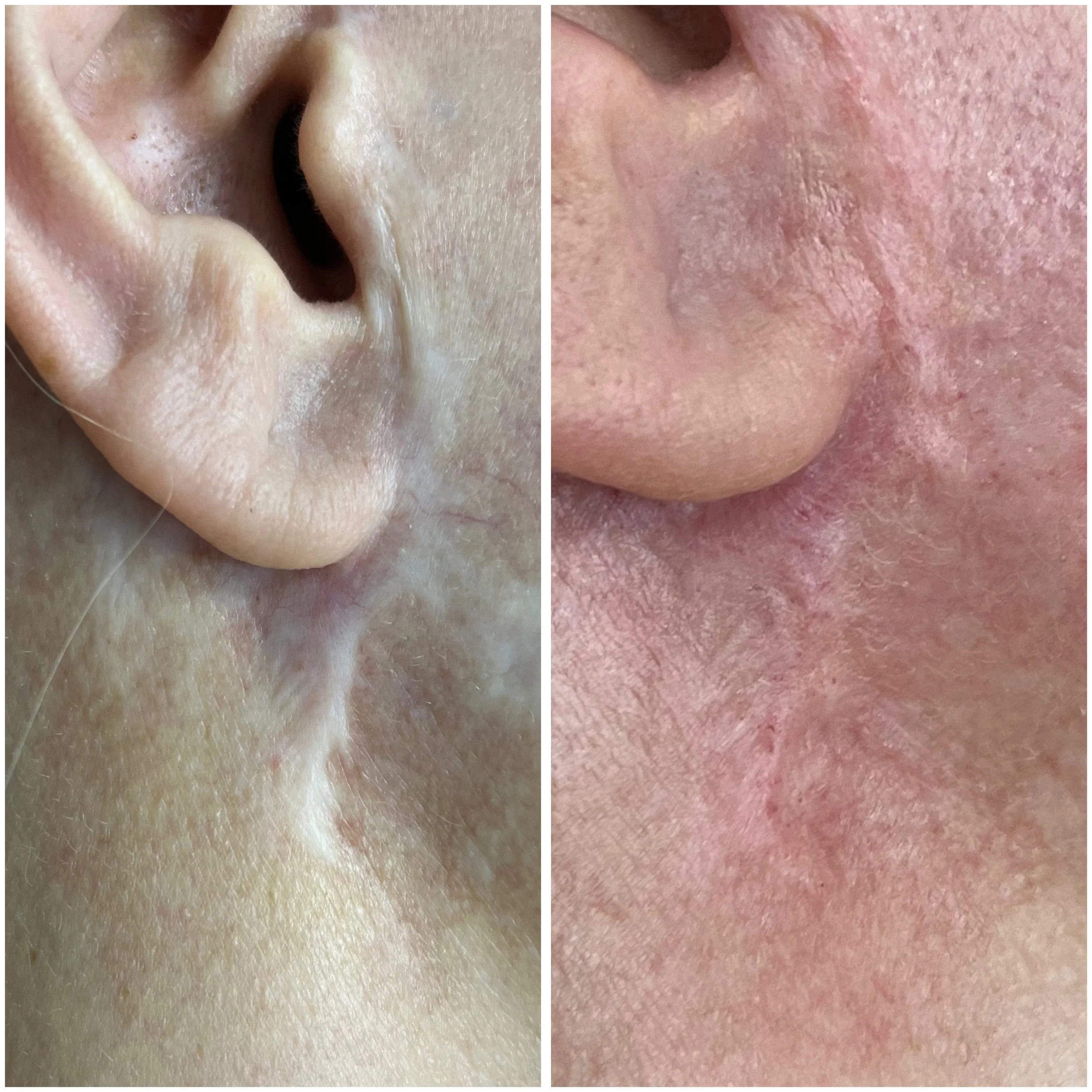
Case 1. Facelift Scar Camouflage — Before & After
An extensive, mature white scar following a lower facelift.
Treatment: 2 micropigmentation sessions, 8 weeks apart.
Pigments were individually matched to the surrounding skin tone. Fine vascular details were carefully recreated to mimic the natural appearance of the skin and achieve a more seamless visual blend.
Result: Reduced contrast between the scar and surrounding tissue, with a more natural, harmonious appearance.
Result shown after healing. Individual results may vary.
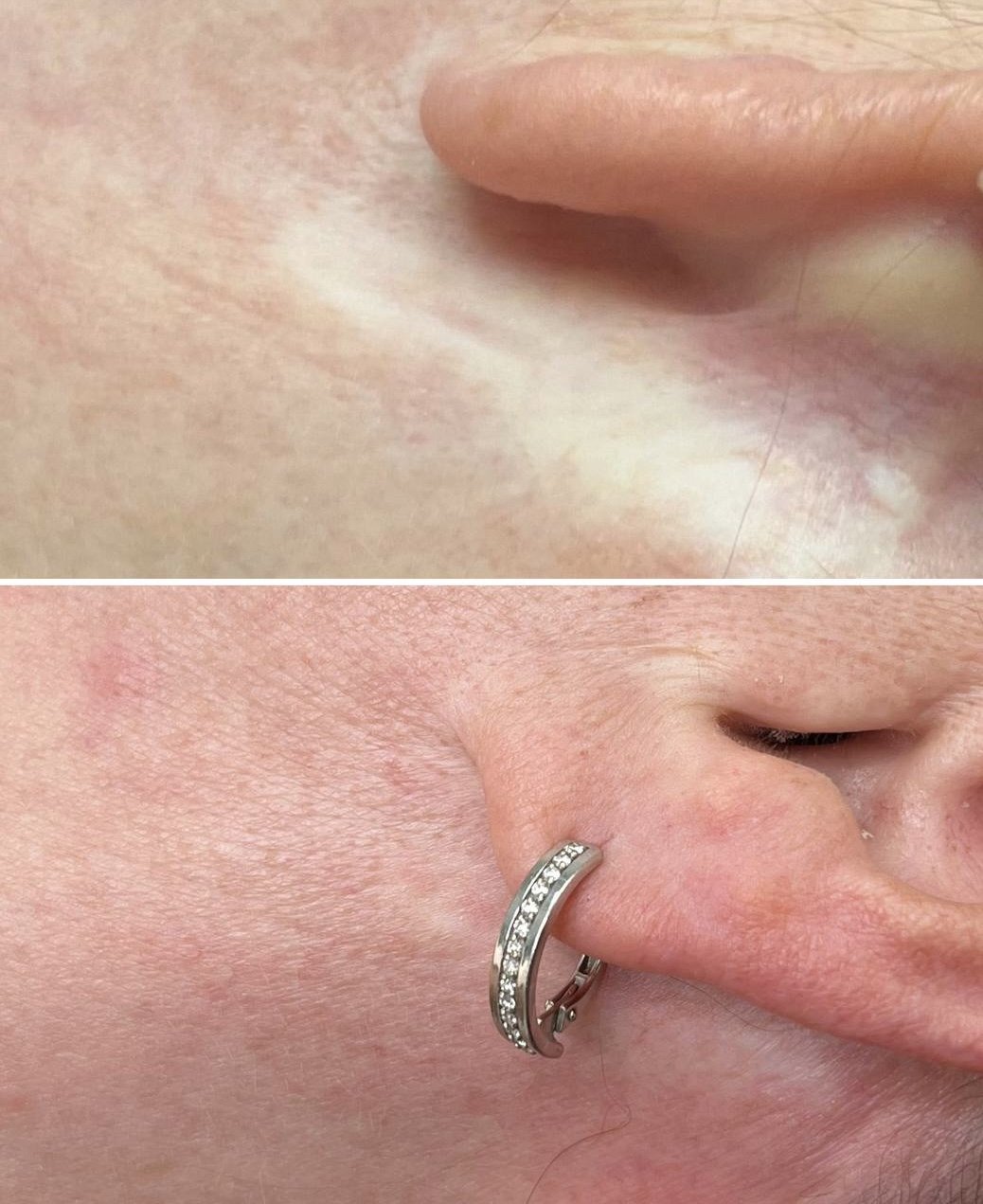
Case 2. Facelift Scar Camouflage — Before & After
A dense, mature surgical scar following a facelift required a carefully planned, layered approach to pigmentation.
Treatment: 3 micropigmentation sessions.
Pigment was gradually implanted in layers to build up colour and achieve a closer match with the surrounding skin. The final session also focused on recreating fine natural skin details to improve the overall visual blend.
Result: A significant reduction in the scar’s visibility. The treated area now blends naturally with the surrounding skin, making the scar difficult to distinguish at a casual glance.
Result shown after healing. Individual results may vary.
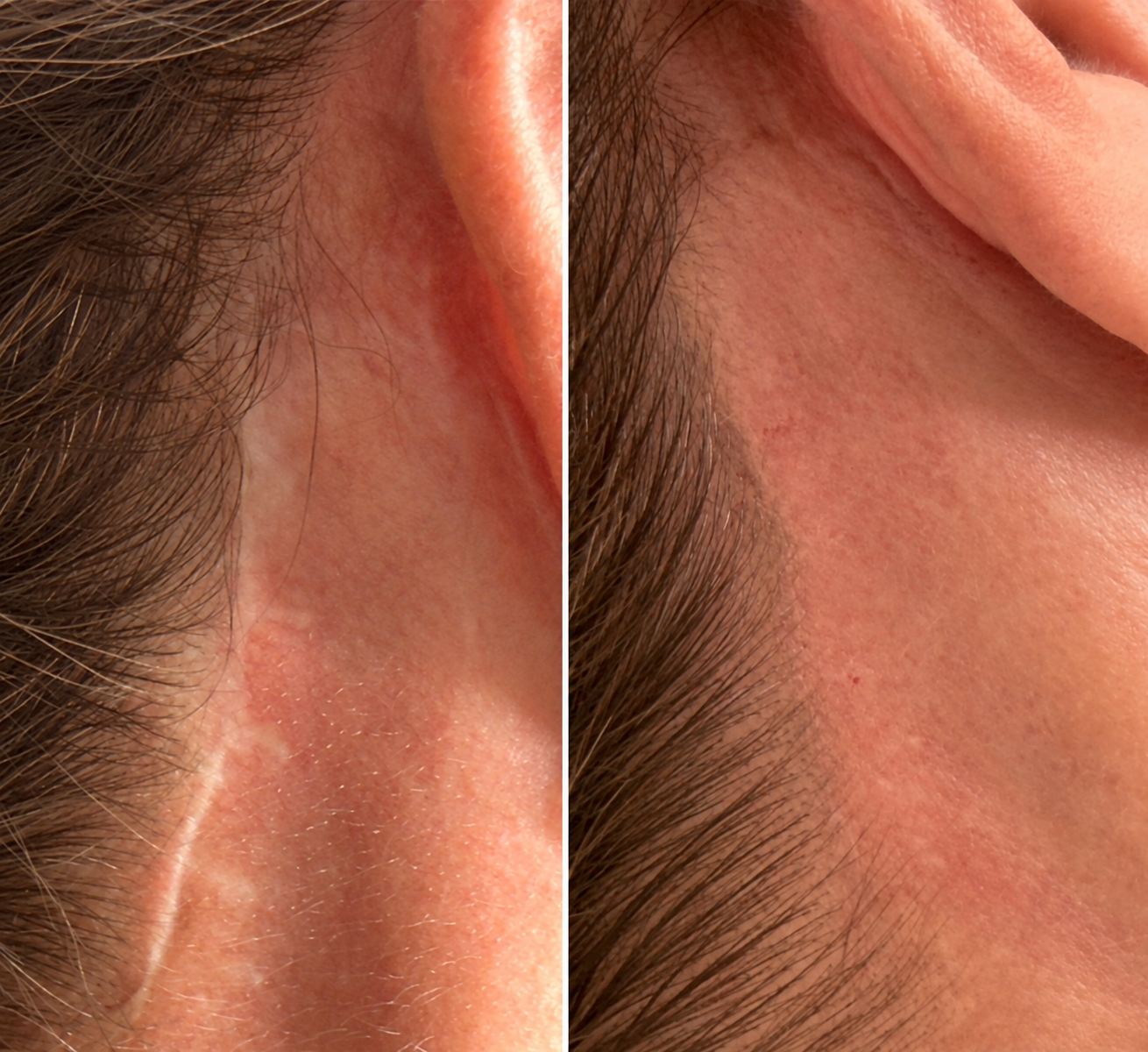
Case 3. Hairline Scar Camouflage – Before & After
A visible pale scar along the hairline created a noticeable contrast with the surrounding skin and natural hair growth.
Treatment: 2 micropigmentation sessions.
During the first session, the scar was carefully repigmented to bring its colour closer to the surrounding skin.
The second session focused on recreating individual hair-like strokes within the treated area, helping the scar blend more naturally into the hairline.
Result: The combination of skin-tone pigmentation and fine hair detailing significantly reduced the visual contrast of the scar, creating a softer, more natural-looking hairline.
Result shown after healing. Individual results may vary.
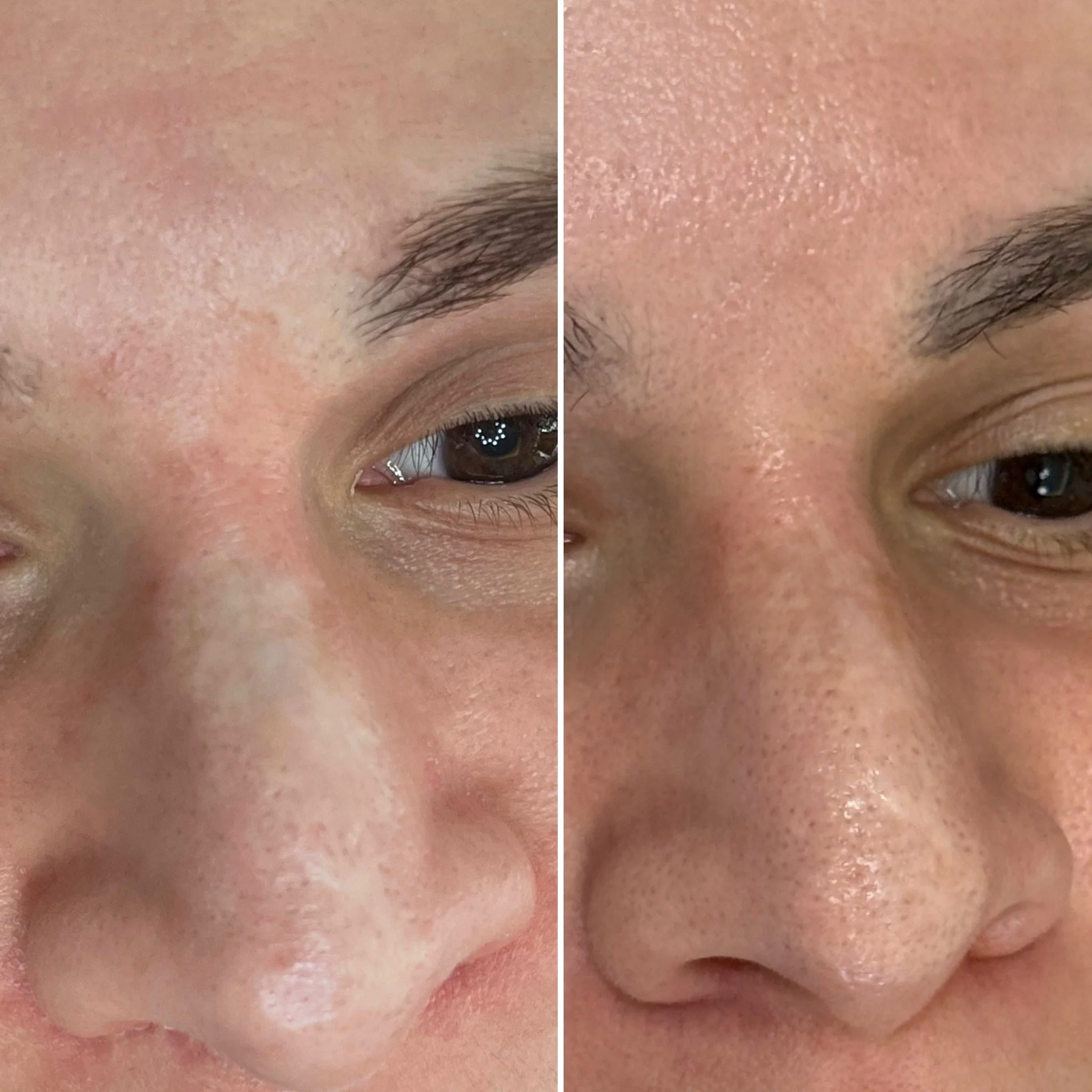
Case 4. Childhood Nose Scar Camouflage – First Session Result
A young woman came to me with an extensive scar across her nose and nasal bridge following a childhood injury.
For years, she had tried to conceal the scar with makeup and cosmetic products, but its visibility continued to affect her confidence. She eventually discovered scar camouflage through a personal recommendation.
Treatment: 1 paramedical micropigmentation session completed.
The first stage focused on carefully matching the pigment to her natural skin tone and reducing the visible colour contrast between the scar and surrounding skin.
Result: After just one session, the difference in skin colour has visibly softened. The scar itself remains, but its appearance is less noticeable.
Next stage: During the second session, I plan to recreate subtle skin details, including the appearance of pores and tiny freckles, to achieve a more natural visual blend.
Intermediate result after one session. Further treatment is planned. Individual results may vary.
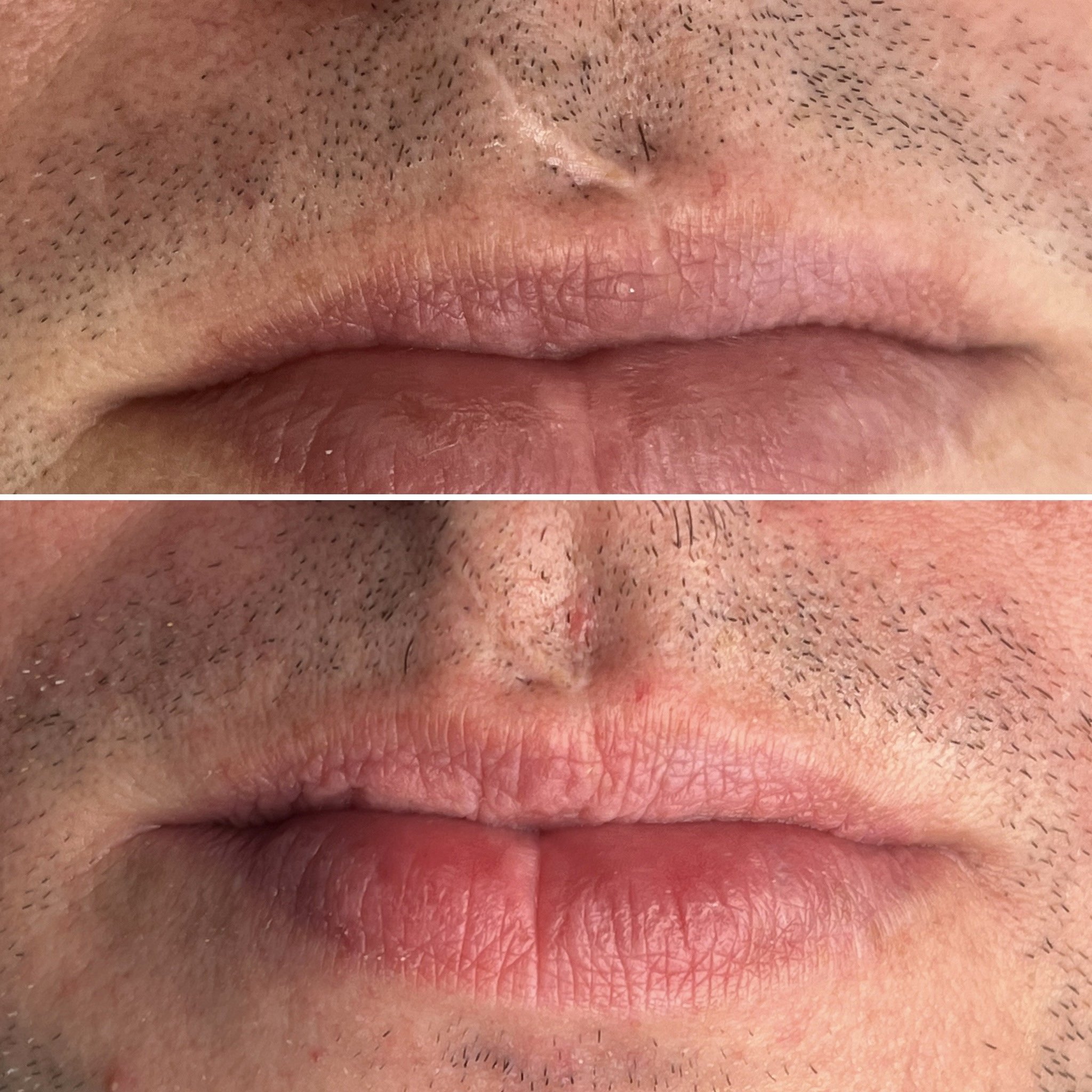
Case 5. Male Upper Lip Scar Camouflage & Natural Lip Correction
A male client came to me concerned about a prominent white scar above his upper lip and visible lip asymmetry following a previous injury.
His priority was a natural-looking result, without any obvious signs of cosmetic tattooing.
Treatment: A carefully planned, multi-stage approach combining scar camouflage, realistic stubble detailing and subtle lip micropigmentation.
First, the pale scar was repigmented to blend more closely with the surrounding skin.
Next, individual stubble-like strokes were recreated over the treated area, adding visual depth and helping the scar blend naturally with the surrounding facial hair.
To address the appearance of upper lip asymmetry, I also performed a subtle watercolour lip micropigmentation treatment. A bespoke pigment blend was matched to his natural lip colour, with the aim of making the correction virtually undetectable.
Result: The completed treatment reduced the visibility of the scar, improved the appearance of lip symmetry and created a natural-looking finish without an obvious permanent makeup effect.
The client was pleased with the result and reported improved confidence.
Completed treatment. Scar camouflage changes the visual appearance of a scar but does not remove it or physically alter the underlying tissue. Individual results may vary.
What it can—and can’t—do
Honesty matters here, so you know what to expect.
Scar camouflage works best on scars that are:
Flat — level with the surrounding skin
Pale or white — lighter than your natural tone
Mature — usually fully healed for at least 12 months and stable in colour
It is usually not suitable for scars that are:
Raised, keloid or hypertrophic
Red, pink, purple or still changing (active)
Very recent
Darker than your surrounding skin — tattooing adds colour, it cannot lighten
Camouflage reduces visibility; it does not erase the scar. Results vary with skin type, scar type and how your skin holds pigment, and most scars need more than one session. Your camouflage also won’t tan, so if your skin darkens in summer there can be a temporary mismatch. We talk all of this through honestly at your consultation — and if camouflage isn’t right for your scar, I’ll tell you.
What to expect
Everything starts with a calm, no-pressure consultation, where I assess the scar, your skin tone and your goals. Because scar tissue takes pigment unpredictably, I usually recommend a small patch test first — to check the colour match and how your skin responds.
Treatment is then built over a series of sessions, typically two to four, spaced several weeks apart to let the colour settle and heal between visits. An anaesthetic cream is used during the procedure, and most clients describe the sensation as a light scratching feeling. Colour looks strongest immediately afterwards and softens as it heals.
Scar camouflage is long-lasting form of micropigmentation. Pigment colour and appearance may change over time, and some clients may require additional treatments or colour adjustments.
A note on self-harm and trauma scars
If your scars carry a difficult story, you are welcome here. I regularly work with these types of scars— with privacy, patience and no judgement, at your pace, once the skin has fully healed and settled. The aim is simple: to help you feel more at home in your own skin.
Book a consultation
If you’re considering scar camouflage in London, the first step is a calm, no-pressure consultation.
Areola Tattoo · Paramedical Micropigmentation · Scar Camouflage Aftercare
Frequently asked questions
Does scar camouflage hurt? An anaesthetic cream is used during the procedure, and most clients describe the sensation as a light scratching feeling. Sensitivity over scar tissue varies from person to person.
Will the scar disappear completely? No — camouflage blends the scar into your skin tone to make it far less noticeable, but it does not remove it.
Which scars can be treated? Flat, pale, mature scars that have been fully healed for around 12 months or more. Raised, red or very recent scars usually aren’t suitable.
How many sessions will I need? Most scars need two to four sessions, spaced several weeks apart. We confirm your plan at the consultation.
Can you treat self-harm scars? Yes — with complete discretion and without judgement, once the skin has fully healed and settled.
How soon after surgery can I have it? Usually once the area has fully healed — often 12 months or more. We recommend confirming timing with your surgeon first.
Is it permanent? It’s long-lasting but not permanent. Colour can soften over the years, and a refresh keeps it looking its best. It depends on your skin type, lifestyle and skin condition.