Scar Camouflage London
Scar camouflage — also called skin re-pigmentation or corrective camouflage — uses paramedical micropigmentation to blend a scar into the surrounding skin, so it becomes far less noticeable in everyday light.
I’m Anna Kovalchuk, a VTCT Level 4 paramedical micropigmentation specialist in London. I work where visual art meets clinical care — what I call applied art-medicine — matching pigment by hand to your own skin tone, with precision and genuine respect for what each scar represents.
What is scar camouflage?
Scar camouflage is a form of paramedical micropigmentation. Skin-tone pigment is matched to your natural colour and gently implanted into a pale, flat scar to reduce the contrast between the scar and the skin around it. The goal is to soften the scar so it blends — not to remove it. Done well, a treated scar becomes much harder to notice in clothing and in normal daylight.
It involves no surgery and no laser — only pigment, skill and an artist’s eye for tone.
Who it’s for
Surgical scars — from breast surgery, after surgical facelift, tummy tuck, C-section, orthopaedic and other operations
Accident and burn scars that have fully healed and settled
Stretch marks that have matured and turned pale
Self-harm scars — treated with complete discretion and without judgement
Cleft lip and other facial scars
Skin grafts and areas of lost pigment
What it can—and can’t—do
Honesty matters here, so you know what to expect.
Scar camouflage works best on scars that are:
Flat — level with the surrounding skin
Pale or white — lighter than your natural tone
Mature — usually fully healed for at least 12 months and stable in colour
It is usually not suitable for scars that are:
Raised, keloid or hypertrophic
Red, pink, purple or still changing (active)
Very recent
Darker than your surrounding skin — tattooing adds colour, it cannot lighten
Camouflage reduces visibility; it does not erase the scar. Results vary with skin type, scar type and how your skin holds pigment, and most scars need more than one session. Your camouflage also won’t tan, so if your skin darkens in summer there can be a temporary mismatch. We talk all of this through honestly at your consultation — and if camouflage isn’t right for your scar, I’ll tell you.
What to expect
Everything starts with a calm, no-pressure consultation, where I assess the scar, your skin tone and your goals. Because scar tissue takes pigment unpredictably, I usually recommend a small patch test first — to check the colour match and how your skin responds.
Treatment is then built over a series of sessions, typically two to four, spaced several weeks apart to let the colour settle and heal between visits. An anaesthetic cream is used during the procedure, and most clients describe the sensation as a light scratching feeling. Colour looks strongest immediately afterwards and softens as it heals.
Scar camouflage is long-lasting but not permanent. Colour can fade gently over the years, and an occasional refresh keeps it looking its best.
A note on self-harm and trauma scars
If your scars carry a difficult story, you are welcome here. I work with these scar regularly — with privacy, patience and no judgement, at your pace, once the skin has fully healed and settled. The aim is simple: to help you feel more at home in your own skin.
Book a consultation
If you’re considering scar camouflage in London, the first step is a calm, no-pressure consultation.
Areola Tattoo · Paramedical Micropigmentation · Scar Camouflage Aftercare
Frequently asked questions
Does scar camouflage hurt? An anaesthetic cream is used during the procedure, and most clients describe the sensation as a light scratching feeling. Sensitivity over scar tissue varies from person to person.
Will the scar disappear completely? No — camouflage blends the scar into your skin tone to make it far less noticeable, but it does not remove it.
Which scars can be treated? Flat, pale, mature scars that have been fully healed for around 12 months or more. Raised, red or very recent scars usually aren’t suitable.
How many sessions will I need? Most scars need two to four sessions, spaced several weeks apart. We confirm your plan at the consultation.
Can you treat self-harm scars? Yes — with complete discretion and without judgement, once the skin has fully healed and settled.
How soon after surgery can I have it? Usually once the area has fully healed — often 12 months or more. We recommend confirming timing with your surgeon first.
Is it permanent? It’s long-lasting but not permanent. Colour can soften over the years, and a refresh keeps it looking its best. It depends on your skin type, lifestyle and skin condition.
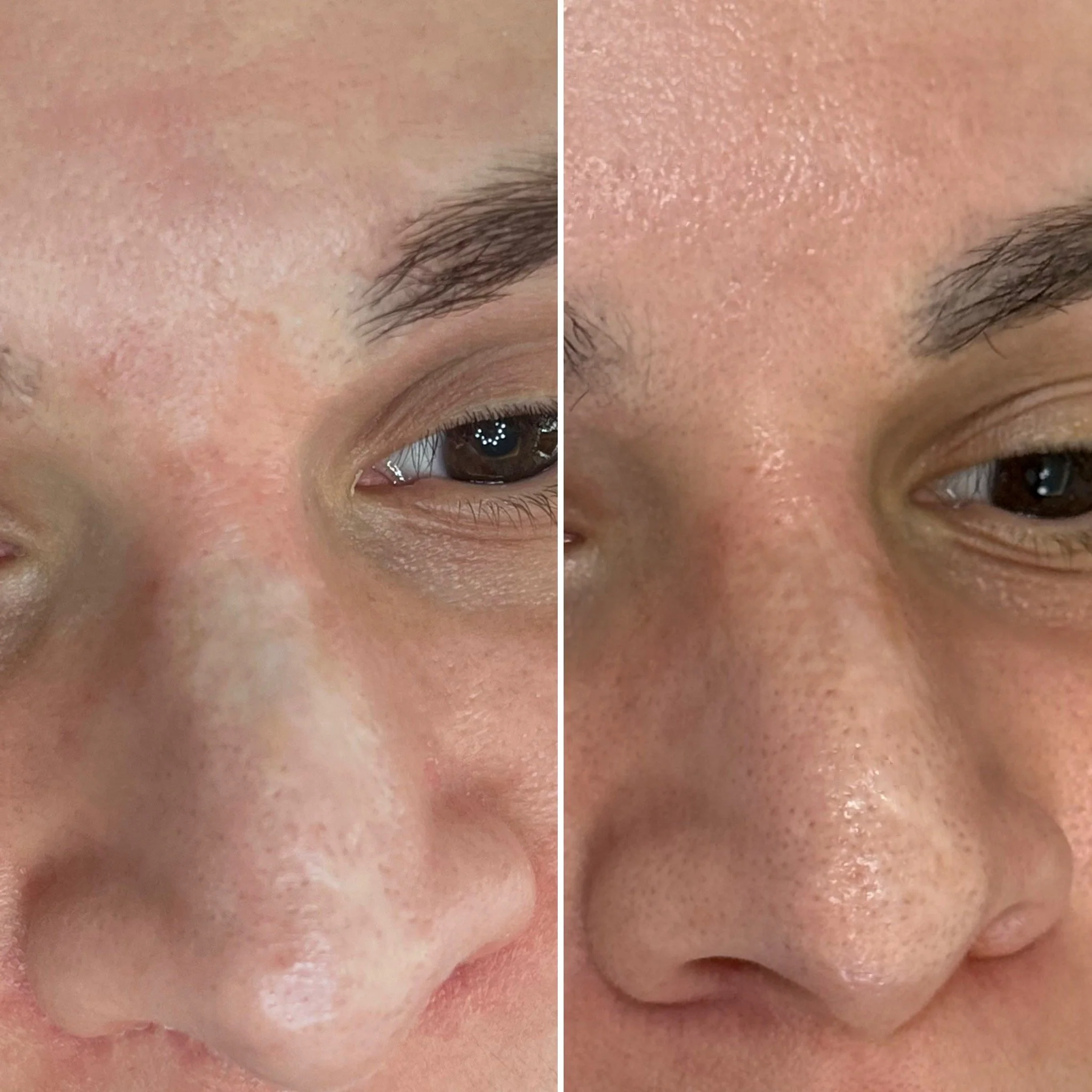
Result shown after healing
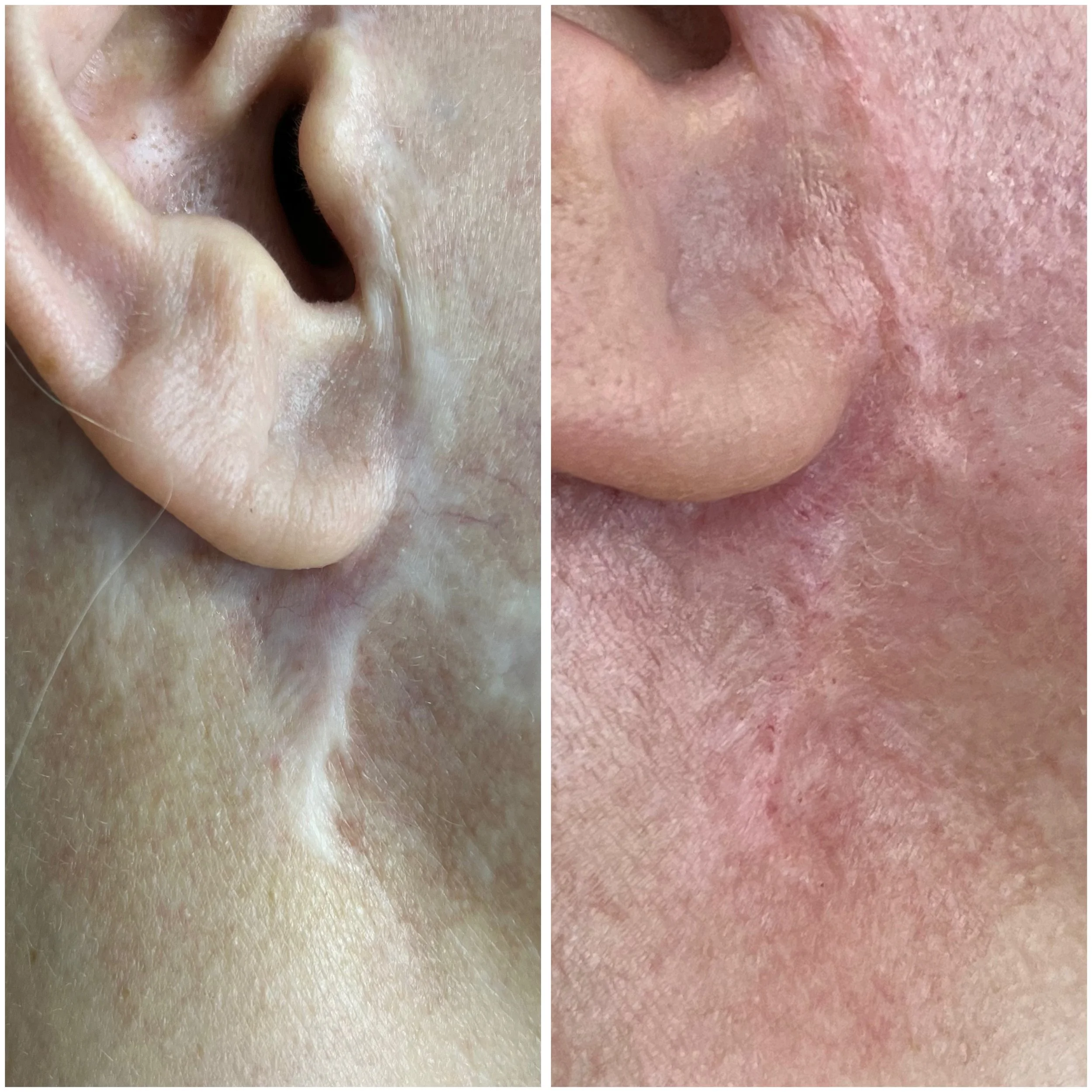
Result shown after healing
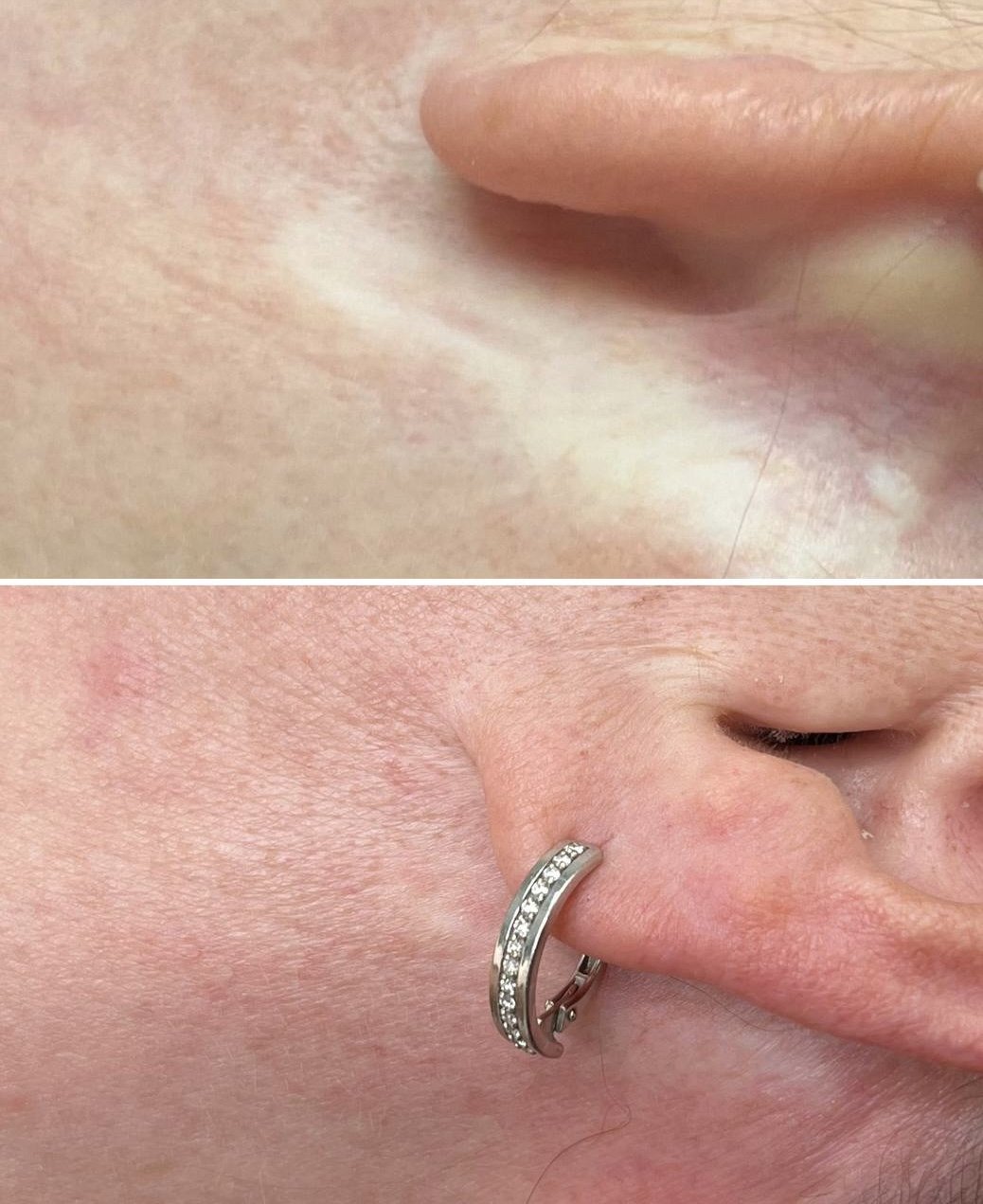
Colour softens as it heals